De mai mult de un an, am tot meditat asupra mecanismelor ce se petrec pentru ca un copil sa invete sa citeasca. Am citit despre mai multe metode - despre invatarea cu phonics, prin metoda Montessori dar si invatarea prin flashcards (metoda Doman). Hotarasem sa o invat pe I. sa citeasca in engleza mai intai - si am scris despre cum am inceput, si alte idei - in aceasta postare.
Cartea pe care eu am citit-o despre Metoda Doman se numeste 'How to Multiply Your Baby's Intelligence' si o gasiti pentru a o citi si descarca gratuit aici.
La inceput am fost foarte sceptica asupra metodei Doman de invatare a citirii prin aratarea rapida a unui set de flashcarduri zilnic copiilor mici, chiar foarte mici, sub un an sa citeasca. In cartea de mai sus se explica foarte clar detaliile acestei metode.
Am fost sceptica si pentru ca I. mea avea deja 3 ani cand am descoperit aceasta metoda, recunoastea toate literele (sunetele literelor) - si nu a parut defel receptiva la folosirea flashcardurilor pentru a invata cuvinte intregi.
In schimb acum, dupa un an si ceva, dupa ce a invatat sa citeasca pe litere (cu phonics), incearca sa citeasca cuvintele direct, fara sa le mai citeasca pe litere - si ii face mare placere cand citeste un cuvant direct, fara a-l mai buchisi. De fapt, sunt o multime de cuvinte pe care ea le recunoste acum vizual, nu pentru ca i le-am aratat ca flashcards, ci pentru ca le-a citit de mai multe ori. Si, mai mult, acum ii plac si flashcardurile -- am incercat zilele acesta sa-i arat cateva carduri cu sight words (the, look, like, - cuvintele care apar cel mai des in limba engleza, si care se decodifica mai greu cu phonics/pe litere, avand reguli specifie.) - si a reactionat foarte pozitiv la ele, chiar jucandu-se ulterior pentru a forma mici propozitii singura.
Cand mi-a cazut zilele trecute ochii pe acest articol - How Children Learn to Read - in sfarsit am gasit raspunsuri la dilemele mele! Mai cu seama, acest paragraf, pe care il citez mai jos:
"Beginning readers use one section of the brain to link the phonetic
sounds to the appropriate letter, and a second section to turn them into
words. It's a process that takes some time, which is why children
learning to read often read very slowly. But then something interesting
starts to happen: a third section of the brain begins to take over. This section helps the child build a permanent registry of familiar
words that can be recognized on sight. This enables them to read by
seeing the whole word instead of stopping to sound it out every time
they see it. Reading eventually becomes effortless."
Deci, cu alte cuvinte, dupa ce citesc de mai multe ori aceleasi cuvinte, copiii le retin, vizual si le vor citit direct. Bineinteles, are sens, nu-i asa, nici noi adultii nu stam sa buchisim pe litere cuvintele, ci le citim dintr-o privire, de fapt, le recunoastem - am inteles cum e posibil ca acei copiii mici sa invete sa citeasca cu metoda Doman (prin flashcarduri) la o varsta foarte frageda (la 1-2 ani). De fapt, prin aratarea succesiva a flashcardurilor este stimulata exact a 3-a zona a creierului despre care se vorbeste in paragraful de mai sus. Ulterior, cand vor mai creste, acesti copii vor ajunge sa isi extraga (singuri sau cu ajutor) regulile fonetice pentru a invata sa decodifice si cuvintele pe care nu le recunosc, sau care sunt mai complicate.
De asemenea, in acest articol pe care il stiu de la Raluca, explica foarte bine:
"A
note on teaching phonics: a child with an auditory digit span of less
than 6 will probably not be successful at learning to read using
phonics. This is because the child cannot hold the auditory pieces in
his brain long enough to figure out what the word is. So, until the
child has an auditory digit span of 6 or better, we recommend teaching
sight words while the auditory processing is being improved. Once it
comes in, phonics is taught quickly and easily and the reading takes
off. Trying to do this prematurely frustrates you and the child. "
Cu alte cuvinte, unii copii sunt imaturi din punct de vedere a procesarii auditive pentru a intelege si citi cu fonice, insa vor beneficia de la invatarea prin invatarea cu flashcards, sa retina vizual cuvintele intregi, urmand ca in timp sa se urmareasca dezvoltarea procesarii lor auditive.
Desigur, nu (mai) pot aplica in totalitatea pe fiica-mea aceasta metoda Doman - pentru a va arata daca functioneaza sau nu, de la zero -- insa am toata convingerea ca Ecaterina, fetita speciala a Ralucai (care urmeaza programul NACD bazat pe regulile Doman) ne va demonstra ca functioneaza!
Cartea despre Metoda Doman se numeste 'How to Multiply Your Baby's Intelligence' si o gasiti pentru a o citi si descarca gratuit aici. Pe mine m-a fascinat indeosebi sectiunea dedicata invatarii timpurie a limbilor straine - despre capacitatea incredibila a copiilor mici de a invata cu usurinta mai multe limbi straine cand sunt expusi zilnic la ele - si m-a inspirat sa incerc limba franceza cu I. A fost o idee foarte buna, I. a fost si este foarte receptiva. Despre invatarea timpurie a limbilor straine am scris in aceasta postare.
Veti gasi mai multe informatii despre metoda Doman pe blogurile Ralucai si a Andreei.
Sper ca va sunt de folos aceste informatii, eu le gasesc foarte interesante si folositoare, ca de altfel tot ce inseamna invatarea timpurie!
Daca aveti intrebari si credeti ca ma pricep sa raspund, lasati un comentariu!
Showing posts with label Learning to Read. Show all posts
Showing posts with label Learning to Read. Show all posts
Tuesday, February 19, 2013

Friday, February 8, 2013
The Very First Reading Set from Usborne
In urma cu cateva luni am cumparat de la Carti Copii de pe Facebook setul The Very First Reading Set de la Editura Usborne. (Setul este la reducere in aceasta perioada.)
Este un set de 15 carti pentru copiii incepatori ale cititului in limba engleza.
Ce e deosebit la aceste carti este ca parintele citeste impreuna cu copilul, in sensul ca pagina din stanga o citeste parintele, iar pagina din dreapta, care contine text mai putin, scris mai mare - o va citi copilul.
Gasiti mai multe informatii, dar si sfaturi, activitati etc aici.
De asemenea, puteti vedea online cateva pagini dintr-una din cartile din set - Run Rabbit Run.
Fiecare carte are la sfarsit cateva exercitii de aprofundare a textului, etc, exercitii care se pot descarca online, chiar daca nu ati cumparat cartile.
Noi am inceput cu prima carte din set - Pirate Pat.


O parte din exercitiile de la sfarsit:

Am citit impreuna :)
Si o parte din exercitiile de la sfarsit:
Este un set de 15 carti pentru copiii incepatori ale cititului in limba engleza.
Ce e deosebit la aceste carti este ca parintele citeste impreuna cu copilul, in sensul ca pagina din stanga o citeste parintele, iar pagina din dreapta, care contine text mai putin, scris mai mare - o va citi copilul.
Gasiti mai multe informatii, dar si sfaturi, activitati etc aici.
De asemenea, puteti vedea online cateva pagini dintr-una din cartile din set - Run Rabbit Run.
Fiecare carte are la sfarsit cateva exercitii de aprofundare a textului, etc, exercitii care se pot descarca online, chiar daca nu ati cumparat cartile.
Noi am inceput cu prima carte din set - Pirate Pat.


O parte din exercitiile de la sfarsit:

Am citit impreuna :)
Si o parte din exercitiile de la sfarsit:
Monday, January 21, 2013
Reading the first easy reader! / Prima mini-carticica citita!
Until now, the girl (4 yrs and 3 months) only practiced reading words (3,4,5 letters), but no sentences or books. So I thought I'd give it a read and give her an early reader. We used the Fat Cat on a Mat early reader, offered for free on Early-Reading.com. I think she did quite well.
Am incercat zilele trecute sa citim o mini-carticica (pentru cei care sunt la inceput in ale cititului). Se numeste Fat Cat on a Mat si o gasiti gratuit pe site-ul Early-Reading.com. Pana acum, I.(4ani si 3 luni) a citit numai cuvinte (de 3-4-5 litere), insa nu am incercat propozitii/carticele.
Iata ce a iesit:
Am incercat zilele trecute sa citim o mini-carticica (pentru cei care sunt la inceput in ale cititului). Se numeste Fat Cat on a Mat si o gasiti gratuit pe site-ul Early-Reading.com. Pana acum, I.(4ani si 3 luni) a citit numai cuvinte (de 3-4-5 litere), insa nu am incercat propozitii/carticele.
Iata ce a iesit:
Friday, November 9, 2012
French books, reading and more on our Weekly School Wrap-Up
Ok, it looks like all we did this week was READ! Read, read, read and read again, especially in French! I've got a great set of books and magazines from the French Cultural Center and also bought kids French magazines from the newspapers stands, so, yes, we had quite a bunch of French stuff to read and enjoy!
She liked the Histoires pour les Petits magazine a lot. I thought the French level would be too difficult for her, but she asked for it each night, all of it! About 60 pages worth of stories - and then once finished, she wants Picoti (all of it) and so on! If we could read each night for at least an hour, she would be so happy!
The big book that you can see is a French version of the Gingerbread man - here's a link on the Amazon for it. We loved this 'Le bonhomme en pain d'epices'! First of all, it is HUGE - see below how it looks, compared to a pocket-size version. Then, each page has 3 section, where the story is being told for 3 yr olds, 4 yr olds and 5 yr olds - gradually rising in difficulty. First I read the easiest version for a couple of times, but when my girl heard the medium (4 yr) version on the CD (yes, it comes with a CD with all 3 versions on it!), she wanted me to read the more complicated version! We just fell in love with the books and I'm definetely planning a Gingerbread man theme for the next week!
My little girl loves books. I've always made sure she has easy access to books - we have a few book baskets around the house with books she can easily see and flip through. Here she is in her 'reading corner' - before going to bed - looking at books and then choosing what she wants me to read.
We also have a French books basket, with some of our books and magazines (not borrowed). I try to rotate the books from time to time and she's always happy to discover the books she hadn't seen for a while.
Except for the French books, we practiced reading short words in English each day, using some fun ideas to practice reading.
We worked on the Pink Series that we purchased from the Montessori Print Shop. You can download a free document that is part of the series. And, if you're looking for something free, the Helpful Garden blog has an excellent Pink Series for free!
And little girl made a bracelet out of bead bears. And one of Cheerios cereals, too, no picture for that one!


I hope you all had a great week!
Some great collections I may be linking to:


 |
| The books and magazines in French we read this week |
The big book that you can see is a French version of the Gingerbread man - here's a link on the Amazon for it. We loved this 'Le bonhomme en pain d'epices'! First of all, it is HUGE - see below how it looks, compared to a pocket-size version. Then, each page has 3 section, where the story is being told for 3 yr olds, 4 yr olds and 5 yr olds - gradually rising in difficulty. First I read the easiest version for a couple of times, but when my girl heard the medium (4 yr) version on the CD (yes, it comes with a CD with all 3 versions on it!), she wanted me to read the more complicated version! We just fell in love with the books and I'm definetely planning a Gingerbread man theme for the next week!
 |
| Gingerbread man books, in En and Fr |
 |
| The reading nook, with the English books basket |
We also have a French books basket, with some of our books and magazines (not borrowed). I try to rotate the books from time to time and she's always happy to discover the books she hadn't seen for a while.
 |
| Our French books basket |
Except for the French books, we practiced reading short words in English each day, using some fun ideas to practice reading.
 |
| Word family flip book |
 |
| Word slides |
 |
| Matching words to pictures |
This is what we're at now, as far as reading goes.
And little girl made a bracelet out of bead bears. And one of Cheerios cereals, too, no picture for that one!
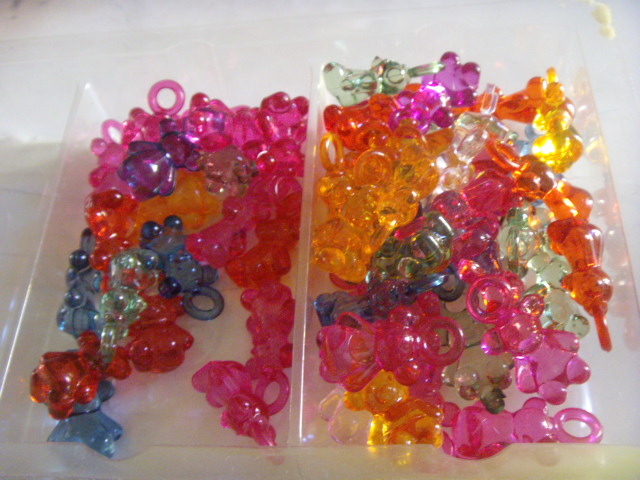


I hope you all had a great week!
Some great collections I may be linking to:
Thursday, November 8, 2012
Fun Ideas to Practise Reading Word Families
I've recently stumbled upon some fun reading ideas for kids on Pinterest - I like the Word Families Flip Books and the Word Slides a lot!
[Am gasit recent pe Pinterest idei pentru exersarea familiilor de cuvinte, mi-au placut mult Word Families Flip Books si Word Slides]
So, inspired from the Word Families Flip Books post, I made a flip book myself, only for the '-at' word family to begin with. The beginning letter sheet ar mobile, while the '-at' stays the same.
[Am incercat si eu sa fac un astfel de carnetel, am taiat foile dupa cum vedeti mai jos, si am scris mai multe litere de inceput pe foile mobile, cred ca se intelege din imagini].


 And then I printed and used the '-at' word slide from School Sparks.
[Si am mai printat un astfel de joc de la School Sparks - foaia cu litera de inceput trece prin cele doua fante taiate si copilul o misca in sus sau in jos incet, citind pe rand cuvintele.]

And we used the '-AT' Family Word game on Starfall.
[Si am folosit jocul pe acceasi tema de pe Starfall.]
We liked all these ideas - they help increase the speed of reading, by recognizing the '-at' ending.
[Am gasit recent pe Pinterest idei pentru exersarea familiilor de cuvinte, mi-au placut mult Word Families Flip Books si Word Slides]
So, inspired from the Word Families Flip Books post, I made a flip book myself, only for the '-at' word family to begin with. The beginning letter sheet ar mobile, while the '-at' stays the same.
[Am incercat si eu sa fac un astfel de carnetel, am taiat foile dupa cum vedeti mai jos, si am scris mai multe litere de inceput pe foile mobile, cred ca se intelege din imagini].


[Si am mai printat un astfel de joc de la School Sparks - foaia cu litera de inceput trece prin cele doua fante taiate si copilul o misca in sus sau in jos incet, citind pe rand cuvintele.]

And we used the '-AT' Family Word game on Starfall.
[Si am folosit jocul pe acceasi tema de pe Starfall.]
We liked all these ideas - they help increase the speed of reading, by recognizing the '-at' ending.
Friday, November 2, 2012
Reading, Languages & Music - About Readeez and more (School Wrap-Up)
I. is now 4 yrs and almost 5 weeks old.
I. are acum 4 ani si 5 saptamani.
Our schedule was thrown off this week, so we took it lightly, as school was concerned. We read a lot, both in English and French - apparently, we took the habit of reading in French before naptime and then in English in the evening.
And we listened to a lot of music. We always listen to music. We have used children songs with great effect to learn both English and French. Music is fun and through repetition, children acquire foreign languages easy through music and movement.
And since my little girl loves music, so another recent habit of ours is to listen to French children music while having breakfast. For Spanish, we continued with Speekee - lots of music and songs there, too!
I showed my little girl the Readeez videos for the first time this week. I have seen them on the 1+1+1=1 blog first, and then when our friend Andrea from Our Beautiful Childhood had only great things to share about the videos, I've decided it was time we tried them, too, the free ones. This is their official Youtube channel and this is the website. Please read Andrea's post for a detailed description of the program and what stands behind it. We both loved the videos, I selected a few of free ones and put them on a list for us to use.
What makes these videos different is that the text of the songs appears onscreen as it's being sung, split into syllables, which I think it's a great option to the traditional flashcards system, meant to help teach children read.
I also see these videos very good to help teach children English as a second language in a fun way.
My daughter's favorites are The Duck Song:
and the All The Pretty Little Horses!
Some great collections I may be linking to:
I. are acum 4 ani si 5 saptamani.
Our schedule was thrown off this week, so we took it lightly, as school was concerned. We read a lot, both in English and French - apparently, we took the habit of reading in French before naptime and then in English in the evening.
And we listened to a lot of music. We always listen to music. We have used children songs with great effect to learn both English and French. Music is fun and through repetition, children acquire foreign languages easy through music and movement.
And since my little girl loves music, so another recent habit of ours is to listen to French children music while having breakfast. For Spanish, we continued with Speekee - lots of music and songs there, too!
I showed my little girl the Readeez videos for the first time this week. I have seen them on the 1+1+1=1 blog first, and then when our friend Andrea from Our Beautiful Childhood had only great things to share about the videos, I've decided it was time we tried them, too, the free ones. This is their official Youtube channel and this is the website. Please read Andrea's post for a detailed description of the program and what stands behind it. We both loved the videos, I selected a few of free ones and put them on a list for us to use.
What makes these videos different is that the text of the songs appears onscreen as it's being sung, split into syllables, which I think it's a great option to the traditional flashcards system, meant to help teach children read.
I also see these videos very good to help teach children English as a second language in a fun way.
My daughter's favorites are The Duck Song:
and the All The Pretty Little Horses!
Some great collections I may be linking to:
Friday, October 26, 2012
Reading & Foreign Languages (School Wrap-up, Week 6)
I. is now 4 yrs and 1 month old.
I. are acum 4 ani si 1 luna.
Here's a glipmse at our week, in pictures:
Iata o parte din activitatile din aceasta saptamana:
Fall & Halloween Theme
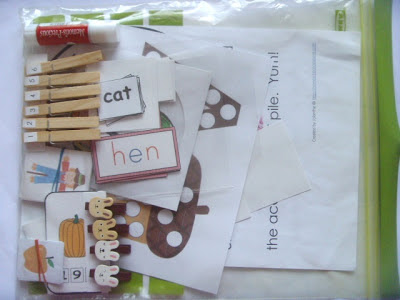
We continued the fall & halloween activities from last week. I gathered all the activities into a busy bag so we could have it handy. (Printables from Homeschool Creations, 2 Teaching Mommies and Creative Learning Fun)
 iPad Halloween Play
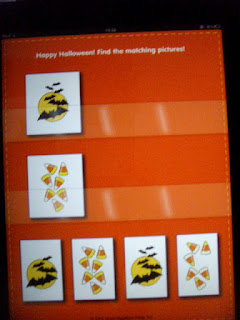
Little girl loved the Pocket Charts! Halloween Matching Game app from the Good Neighbor Press. that went free last week

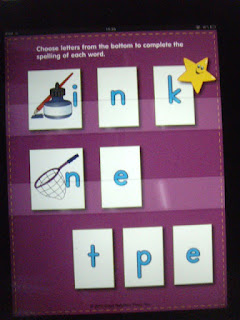
Also played with the First Words Halloween app from Learning Touch.


Reading - Phonics and the 'AT' Word Family
We continued to use the Pink Series for free from the Helpful Garden blog and our moveable alphabet.
We use our iPad for school almost daily. We used the Pocket Charts: Spelling 3-Letter Words from Good Neighbor Press for the first time this week and little girl could complete it by herself with minimal help from me (she needs help on the words: eye, ape, etc.). You need to add the last letter to the words.
We started learning about the 'AT' word family using cards, worksheets, the iPad, and the Starfall website. I printed some worksheets and cards from the 'at' word family pack from 3Dinosaurs, they are just what we needed! I also used some Bob books printables from the Homeschool Den.
We played the AbiTalk Phonics Vowels app on the iPad, insisting more on the 'at' words family section.

French Learning
Little girl chose French a lot over this week - she requested a lot of French music (during breakfast or dinner), we read lots of books and spoke a lot in French.
Here's a recording of her from a couple nights ago, when she chose to 'read' two books to me, 'Le vilain petit canard' and 'Poucette' - if you have the patience to listed through the first story, the second part is really nice, I like it a lot the way she told the story of Poucette. (You cannot see too much, it was darker in the room, sorry about that!)
Spanish Learning
Little girl is still in love with the Spanish language, so she watched a few lessons from Speekee this week and some other cartoons on youtube. She loved to practice saying out loud the words she knows - here she is in the video below - we were flipping through an easy picture book in English and I asked her if she knows the words in Spanish, too:
Some great collections I may be linking to:


I. are acum 4 ani si 1 luna.
Here's a glipmse at our week, in pictures:
Iata o parte din activitatile din aceasta saptamana:
Fall & Halloween Theme
We continued the fall & halloween activities from last week. I gathered all the activities into a busy bag so we could have it handy. (Printables from Homeschool Creations, 2 Teaching Mommies and Creative Learning Fun)

Little girl loved the Pocket Charts! Halloween Matching Game app from the Good Neighbor Press. that went free last week


Reading - Phonics and the 'AT' Word Family
We continued to use the Pink Series for free from the Helpful Garden blog and our moveable alphabet.
 |
| Matching words to images |
 |
| Making words with the moveable alphabet |



We started learning about the 'AT' word family using cards, worksheets, the iPad, and the Starfall website. I printed some worksheets and cards from the 'at' word family pack from 3Dinosaurs, they are just what we needed! I also used some Bob books printables from the Homeschool Den.
 |
 |
 |
| Worksheet from 3Dinosaurs |

French Learning
Little girl chose French a lot over this week - she requested a lot of French music (during breakfast or dinner), we read lots of books and spoke a lot in French.
Here's a recording of her from a couple nights ago, when she chose to 'read' two books to me, 'Le vilain petit canard' and 'Poucette' - if you have the patience to listed through the first story, the second part is really nice, I like it a lot the way she told the story of Poucette. (You cannot see too much, it was darker in the room, sorry about that!)
Little girl is still in love with the Spanish language, so she watched a few lessons from Speekee this week and some other cartoons on youtube. She loved to practice saying out loud the words she knows - here she is in the video below - we were flipping through an easy picture book in English and I asked her if she knows the words in Spanish, too:
Some great collections I may be linking to:
Saturday, October 13, 2012
Write the Room labels
An idea I have seen some time ago on a few blogs (Montessori-inspired, too) is to 'write your home'. That is, add labels with words to different objects in your house, at the height of your child's eyes, preferably. it will help early emergent readers to associate words to objects and get that visually practice daily, without effort.
I have used a set of self-adhesive white stickers and red marker (red is more visually appealing than black), to put labels on the door, table, chair, laptop etc. You can make your own, by hand or on the computer, you can use the ones offered by 1+1+1=1 or, you can use a similar game that you can read about at Montessori Plus.
It is also a good practice for children learning English as a second language.
Am vazut urma cu un timp pe cateva bloguri straine (de inspiratie Montessori unele), o idee care mi-a ramas in minte, urmand sa o pun in practica la momentul potrivit. Ideea este de a pune eticheta cu cuvinte la diverse obiecte din casa, la nivelul ochilor copilului. In principiu, in locuri unde se indrepteaza des si de asemenea, pe obiecte care le foloseste des. Mi se pare un exercitiu bun pentru copiii care incep sa citeasca, astfel copilul va vedea des aceste cuvinte si le va asocia cu obiectul respectiv.
Am gasit zilele trecute un set de etichete autoadezive albe (in Auchan), si mi s-au parut numai bune pentru acest scop. Am scris eu cuvinte, cu rosu (atrage atentia mai bine decat negru) si le-am lipit pe usa, pe pat, pe masa, pe ... cate o jucarie, etc.
O alta varianta este sa va faceti aceste etichete pe calculator si sa le printati la dimensiunea dorita. Online, am vazut un set la 1+1+1=1, in limba engleza. O alta varianta de joc, gasiti aici.
Mi se pare ca ar fi un exercitiu bun si pentru copiii care invata limba engleza.


I have used a set of self-adhesive white stickers and red marker (red is more visually appealing than black), to put labels on the door, table, chair, laptop etc. You can make your own, by hand or on the computer, you can use the ones offered by 1+1+1=1 or, you can use a similar game that you can read about at Montessori Plus.
It is also a good practice for children learning English as a second language.
Am vazut urma cu un timp pe cateva bloguri straine (de inspiratie Montessori unele), o idee care mi-a ramas in minte, urmand sa o pun in practica la momentul potrivit. Ideea este de a pune eticheta cu cuvinte la diverse obiecte din casa, la nivelul ochilor copilului. In principiu, in locuri unde se indrepteaza des si de asemenea, pe obiecte care le foloseste des. Mi se pare un exercitiu bun pentru copiii care incep sa citeasca, astfel copilul va vedea des aceste cuvinte si le va asocia cu obiectul respectiv.
Am gasit zilele trecute un set de etichete autoadezive albe (in Auchan), si mi s-au parut numai bune pentru acest scop. Am scris eu cuvinte, cu rosu (atrage atentia mai bine decat negru) si le-am lipit pe usa, pe pat, pe masa, pe ... cate o jucarie, etc.
O alta varianta este sa va faceti aceste etichete pe calculator si sa le printati la dimensiunea dorita. Online, am vazut un set la 1+1+1=1, in limba engleza. O alta varianta de joc, gasiti aici.
Mi se pare ca ar fi un exercitiu bun si pentru copiii care invata limba engleza.


Thursday, October 11, 2012
Home-made Mini-book for Beginning Reading
This is a mini-book I've made for my daughter, for her to practice reading by sounding out the words (phonics method).
The printables are a free download from The Montessori Print Shop, they are part of the set for beginning reading, phonics-based.
I basically used a photo album - on the front page I put the word, and on the back of the page, I put the image. I've done that so that the child cannot see the image at first, to say the word by looking at the picture. This way, she reads the word, and then turns the page to the image, to check if she was right (self-correcting method).
Am facut o mini-carticica cu I., pentru exersarea cititului cuvintelor simple, pe litere/sunete. Am folosit fisierul de la The Montessori Print Shop.
Am folosit un album foto mic, pe cate o pagina am pus un cuvant, iar pe partea cealalta, imaginea respectiva. Nu le-am pus impreuna pe o pagina, pentru ca exista tendinta de a 'citi' cuvantul, luandu-se dupa imagine, si nu doream asta. Astfel, ea citeste cuvantul pe litere, apoi intoarce pagina sa se verifice singura daca a citit corect.
It was a success, she enjoyed it!!
I did not fill the book, I only started with 6 words. I plan to change the words on a regular basis - not sure if daily, or maybe weekly. I'm looking for more suggestions on this! Please let me know what games you use for beginning readers, to keep them interested in reading, and make it joyful, not boring!
A avut succes, i-a placut!
Am pus doar 6 cuvinte, pt inceput, si ma gandesc sa le schimb, nu stiu daca zilnic, sau poate o data pe saptamana. Daca aveti si alte idei de exersare a cititului pentru incepatorii mici, spuneti-ne si noua, sunt in cautare de idei noi, interesante, de invatare prin joaca! Multumim!
The printables are a free download from The Montessori Print Shop, they are part of the set for beginning reading, phonics-based.
I basically used a photo album - on the front page I put the word, and on the back of the page, I put the image. I've done that so that the child cannot see the image at first, to say the word by looking at the picture. This way, she reads the word, and then turns the page to the image, to check if she was right (self-correcting method).
Am facut o mini-carticica cu I., pentru exersarea cititului cuvintelor simple, pe litere/sunete. Am folosit fisierul de la The Montessori Print Shop.
Am folosit un album foto mic, pe cate o pagina am pus un cuvant, iar pe partea cealalta, imaginea respectiva. Nu le-am pus impreuna pe o pagina, pentru ca exista tendinta de a 'citi' cuvantul, luandu-se dupa imagine, si nu doream asta. Astfel, ea citeste cuvantul pe litere, apoi intoarce pagina sa se verifice singura daca a citit corect.
 |
| The word to read |
 |
| The image on the back of the page. |
It was a success, she enjoyed it!!
I did not fill the book, I only started with 6 words. I plan to change the words on a regular basis - not sure if daily, or maybe weekly. I'm looking for more suggestions on this! Please let me know what games you use for beginning readers, to keep them interested in reading, and make it joyful, not boring!
A avut succes, i-a placut!
Am pus doar 6 cuvinte, pt inceput, si ma gandesc sa le schimb, nu stiu daca zilnic, sau poate o data pe saptamana. Daca aveti si alte idei de exersare a cititului pentru incepatorii mici, spuneti-ne si noua, sunt in cautare de idei noi, interesante, de invatare prin joaca! Multumim!
Subscribe to:
Posts (Atom)